Rabu, 22 Mei 2013

School Task List


School Task List


1.    Work on the task of Social Sciences of the culture.
2.    Evaluation Working CHAPTER four task Natural Science.
3.    Memorize Chapter eleven of inductive and deductive inference task Indonesian.
4.    Green education job interview.
5.    Citizenship Education Task :  make Clippings on International Law and Justice.
6.    A blog post about "School Task list", Task English.
7.    Task Teaching in Secondary School Leadership two West Cikarang.
8.    Work on Evaluation, Islamic religious education tasks.
9.    Deuteronomy math daily.
10. Improvements to repeat Citizenship Education.
11.  Creating a video ad, entrepreneurial tasks.
12.  Repeated oral TSMRLAN lesson.
13.  Practice install debian TSMRLAN lesson.
14.  Prepare reports PRAKERIN.
15.  Prepare reports RPP leadership teaching duties.
16. presentation of the report PRAKERIN.


Jumat, 19 April 2013

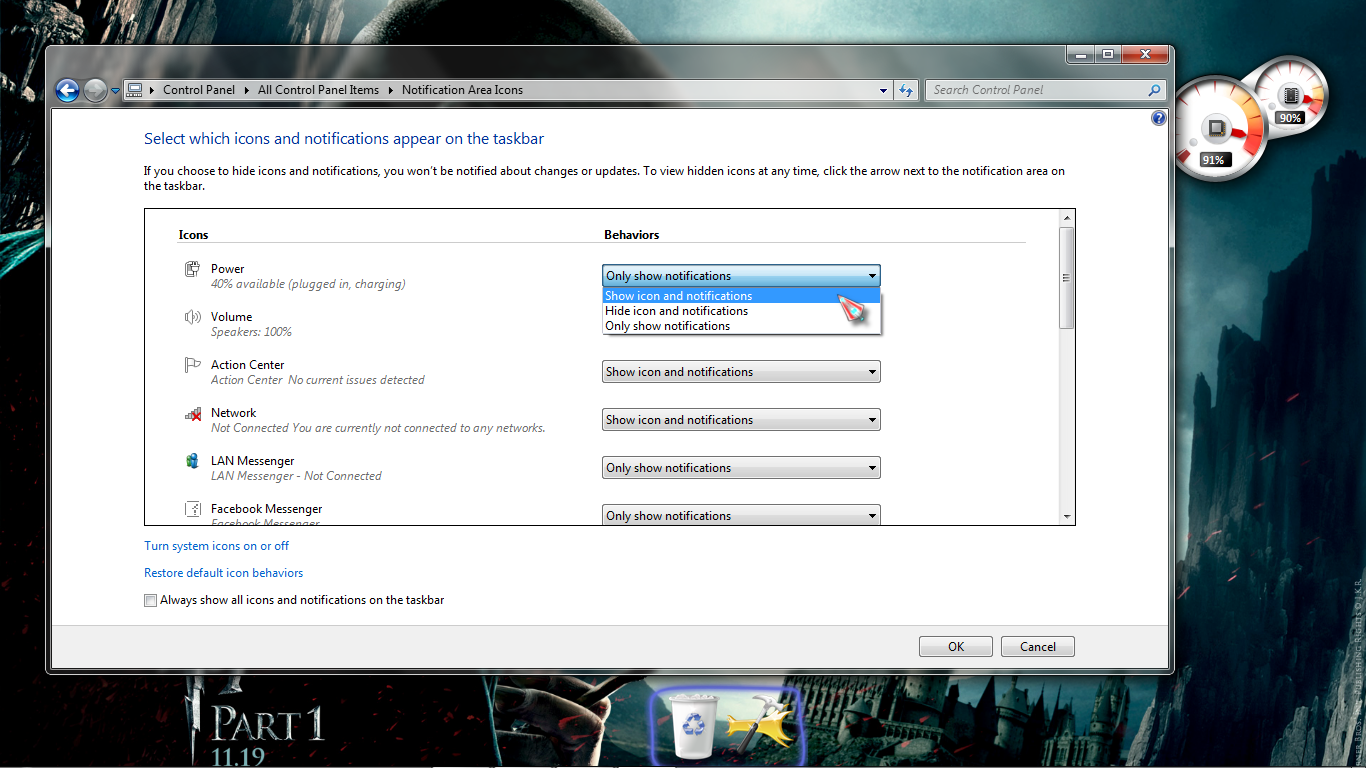
How to know the notification area icon on pc

I want to show you intruction about  notification area icon on pc

 
 Step 1 klik start or windows and klik control panel

Step 2 klik Notification Area Icon


Step 3 you choose to hide or show icon and notification


Finally click ok final step to approve

Senin, 25 Februari 2013

grammar review


  • Noun-Clause Starters
    "We use various words to start noun clauses. . . .

    "These words include the word that, which in its role as a noun clause starter is not arelative pronoun, for it serves no grammatical role in the clause; it just starts the clause. For example: The committee stated that it would follow the agent's policy. Here the noun clause serves the noun role of direct object of the transitive verb stated. But a careful look at the clause reveals that the word that does not serve any role within the clause, other than simply to get it going.

    "Other noun clause starters do serve grammatical roles within the clause. For example: We know who caused all the trouble. Here the noun clause starter is the relative pronoun who. Notice that inside the noun clause who serves as the grammatical subject of the verbcaused.

    "Additional words serve as noun clause starters. A relative adverb can get one going: Howhe won the election mystified the pundits. So can a relative pronoun acting as an adjective: We know which career she will pursue. In these two sentences, how is an adverb modifying the verb won, and which is a relative-pronoun-adjective modifying the noun career."
    (C. Edward Good, A Grammar Book for You and I--Oops, Me!. Capital Books, 2002)


  • "I have run,
    I have crawled,
    I have scaled these city walls,
    These city walls
    Only to be with you,
    Only to be with you.
    But I still haven't found what I'm looking for."
    (written and performed by U2, "I Still Haven't Found What I'm Looking For." The Joshua Tree, 1987)

Grammar review : Conjunctions


Parts of Speech
Chapter 8  - Conjunctions
conjunction is a word that connects other words or groups of words.  In the sentence Bob and Dan are friends the conjunction and connects two nouns and in the sentence  He will drive or fly,  the conjunction or connects two verbs.  In the sentence It is early but we can go, the conjunction butconnects two groups of words.
Coordinating conjunctions are conjunctions which connect two equal parts of a sentence.  The most common ones are and, or, but, and so which are used in the following ways:
and is used to join or add words together in the sentence They ate and drank.
or is used to show choice or possibilities as in the sentence He will be here on Monday or Tuesday.
but is used to show opposite or conflicting ideas as in the sentence She is small but strong.
so is used to show result as in the sentence I was tired so I went to sleep.

Subordinating conjunctions connect two parts of a sentence that are not equal and will be discussed more in another class.  For now, you should know some of the more common subordinating conjunctions such as:
    after                before                unless
    although          if                        until
    as                   since                   when
    because          than                    while

Correlative conjunctions are pairs of conjunctions that work together.  In the sentence Both Jan and Meg are good swimmersboth . . .and arecorrelative conjunctions.  The most common correlative conjunctions are:
    both . . .and
    either . . . or
    neither . . . nor
    not only . . . but also

GIVING INVITATION

GIVING  INVITATION
1.Meaning
Giving invitation is an expression that is disclosed when there is someone who wants to ask other persons to come to a place or when there is someone who asks others to do something for him/her.
2.Expressions and Responses of Inviting

3.Dialogue Invitation
Arif  : Hi, Tika.
Tika  : Hi, Arif. What’s up friend?
Arif  : Hmmm, are you doing anything for next week?
Tika  : Nothing. Why?
Arif  : Hmm, like you know, next week we will have summer vacation to
Bali and I think that I need you to be my date. Would you mind to come along with me?
Tika  : Really? I’d love it so much.
Arif  : Well, I will pick you at 7 a.m next week at school.
Tika  : OK. Thanks Arif.
Arif  : You’re welcome. Bye Tika and see you next week.
Tika  : See you, too. Bye-bye.
USED TO
•The word used to refer to a definite time in the past.
Used to is used for showing habit in the past time.
Examples:
I used to go to the movies a lot.
Used to is used for regular actions or events in the past that no longer happen.
Examples:
I used to play badminton twice a week, but now I only play once a month.
Example in dialogue
Tika  : Do you play tennis?
Risky  : I used to play a lot, but I haven’t played for years.
Tika  : Do you enjoy playing?
Rizky  : Very much. But I never have time.
Tika  : Are you very good?
Rizky  : I used to be OK.
Tika  : Would you like a game?
Risky  : Of course.
Tika  : When can you get away?
Risky  : How about Friday, after work?
Tika  : That would suit me.
Risky  : Do you know where we can play?
Tika  : There are courts at our gym. I’ll reserve one.

Minggu, 24 Februari 2013

Expressing certainty


Expressing certainty and uncertainty


Certainty and uncertainty
Certainty is the state of being completely confident or having no doubt about something. However, uncertainty is when nothing is ever decided or sure.
Expressing certainty
When you are sure that something will or will not happen in the future, use these expressions.
For example to the question:
"Will John pass the exam?"
you may respond as follows:
Yes,I'mabsolutely sure
quite sure
certain
positive
he will.
definitely.
certainly.
of course.

or
No,I'mabsolutely sure
quite sure
certain
positive
he won't.
definitely not.
certainly not.
of course not.
Expressing uncertainty
When you are not sure whether something or someone will or will not happen, use the following expressions.
For example, to the question:
"Will John follow a career in business?"
you may respond as follows:
Well,it's possible,
it's impossible,
it might be,
it might not be,
it could happen, 
I suppose,butI wouldn't like to say for certain.
I'm not sure
I doubt it.
I have my own doubts.
it's doubtful.
It's highly / very unlikely.
you never know of course,
no one can know for certain.
I can't tell you for sure.

Sabtu, 23 Februari 2013

Giving and Responding to Compaliment

GIVING COMPLAIMENT
Everyone likes to hear compliments. Compliments make people feel good about themselves, and we all need that at times. Hotel guests and staff are no exceptions. Guests may give hotel staff compliments for the quality of their service, for their English ability, for their appearance in an unique uniform, or for doing something a little extra for the guest.A hotel staff may give a guest a compliment about how they look in a newly purchased outfit, or for their patience when a problem arises, or for a beautiful new hair style after visiting a beauty parlor. Look at the expressions below that can be used when giving and responding to compliments.Expression Of Giving CompalimentGiving Complaiments—That’s a very nice …(dress).—Great job on the …(presentation).—You look very good in … (that new hair-do).—This dish is delicious, my compliments to the chef.—That … (tie) looks great on you.—Responses to compliments—How kind of you to say so.—Thank you.—I’m glad you like it.—It was nothing really. (an expression of modesty and humility)Learn the expressions used for giving compliments to others. Practice by saying them loudly.—Your performance on the stage is amazing.—How wonderful to listen to  your  great voice.—How mar vellous .—Great ! (You look great) / Great for  you.—Terrific ! (Hey, that’s terrific !)—Fantastic!—Smashing.—That’s really remarkable /well  done.—Now, learn the expressions  use for responding to compliments.—It’s very kind of you to say so.—Thank you.—I can say how pleased (delighted) I am.—I’m delighted  to hear  that.—Thank for your compliment.


Dialogue
Staff: What a beautiful dress, Mrs. Elliot.
Guest: Thanks, I’m glad you like it.
Staff: Your new hair-do looks absolutely gorgeous, Mrs. Simpson.
Guest: How kind of you to say so.
Guest: My compliments to the chef. This linguine is superb.
Staff: Thank you ma’am. I’ll be sure to let the chef know.
Guest: Your English is very good.
Staff: Thank you very much.
Staff: Excellent game Mr. Johnson. You really gave me a workout.
Guest: Thanks, I guess all those private lessons are finally paying off.
Guest: I really appreciate all the extra work you did on helping us solve that problem. It truly went above and beyond. My compliments to your work ethic.
Staff: Thank you sir, how kind of you to say so.